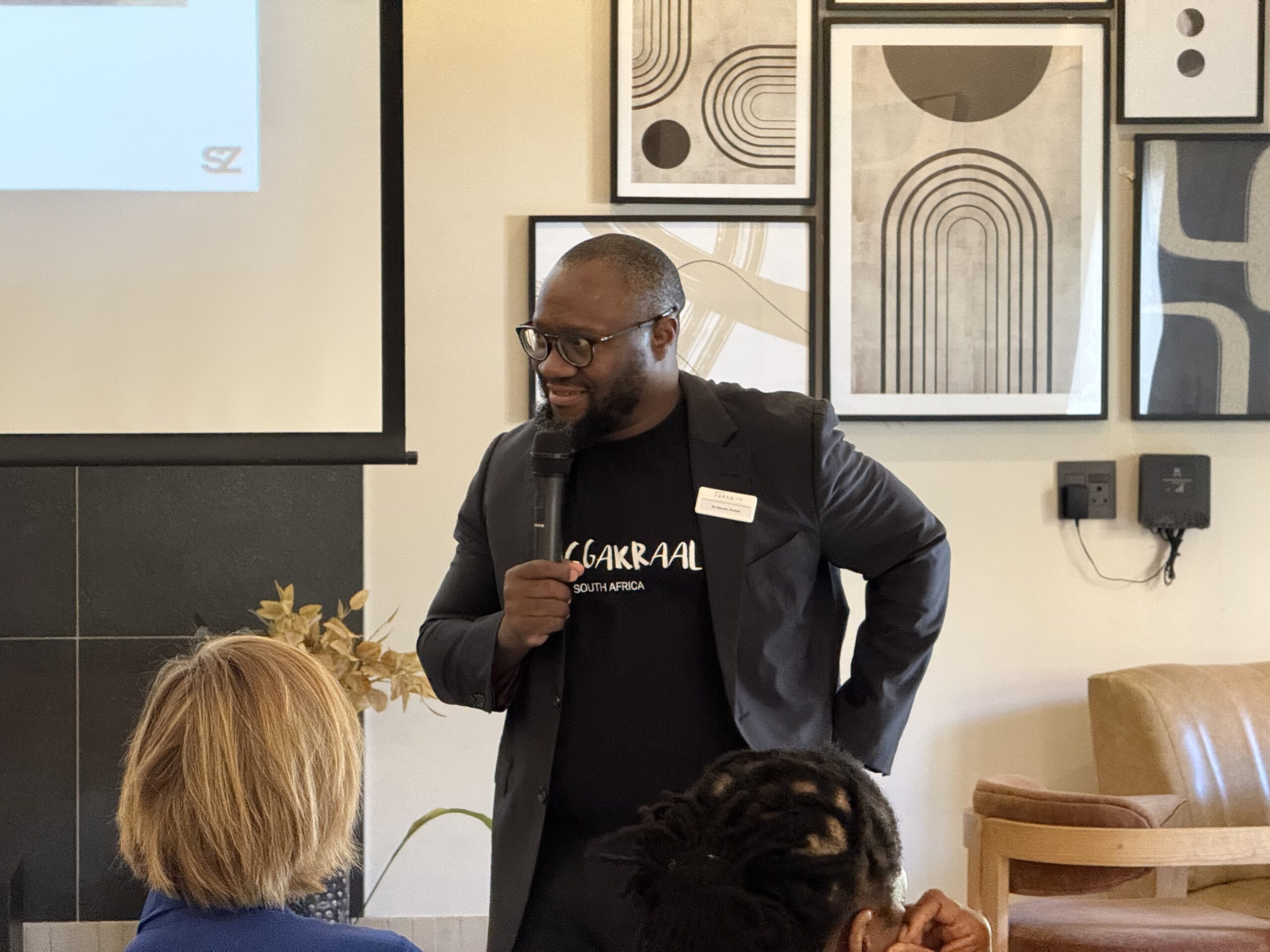
Tuesday Consulting’s Table Talk Tuesday event on 18 March 2025 featured Dr Steven Zwane, who shared powerful insights on entrepreneurship development for South African youth.
On 18 March 2025, Tuesday Consulting hosted another successful Table Talk Tuesday breakfast at Hyatt House Sandton. The event, established by directors Wendy Spalding, Tsholofelo Nketane, and Julie Murray, brought together a diverse group of professionals to connect, collaborate and share knowledge.
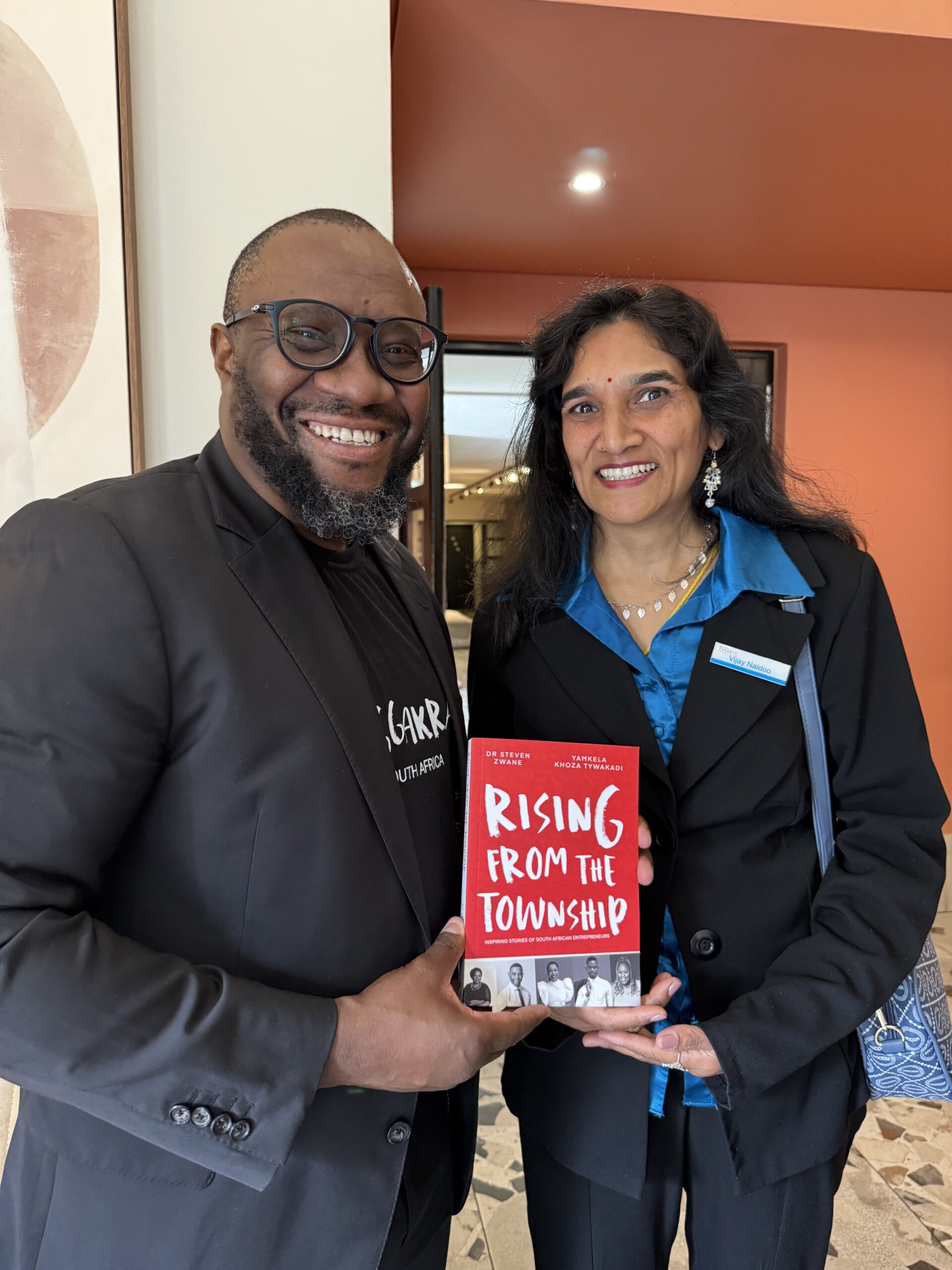
The morning’s keynote speaker was Dr Steven Zwane, Managing Executive for Corporate Citizenship at Absa Group, who discussed his recently published book Rising from the Township, co-authored with Yamkela Khoza Tywakadi, who was also present at the event.
Dr Zwane brings impressive credentials to his role at Absa Group, where he leads pan-African initiatives focused on enhancing societal well-being. He holds a BSc in computer science, an MBA, and a Doctorate from Durham University.
Beyond his corporate responsibilities, Dr Zwane founded a social enterprise, Youth Leadership and Entrepreneurship Development (YLED) in 2004. This organisation continues to equip young people with skills for success in the workplace. More than 20,000 young people have benefitted from YLED’s programmes since its inception.
Dr Zwane’s perspective on entrepreneurship is deeply informed by his extraordinary personal journey. Born to teenage parents who left him with his grandparents in rural Daggakraal when he was just three months old, he faced significant adversity from an early age. He did not attend school until he was about 10 years old, after a dramatic reunion with his mother, who took him to Johannesburg.
Living in Dobsonville, Soweto, with 17 other people in a single house, the young Steven quickly displayed his entrepreneurial spirit by shining shoes on the weekends to help support his household. “School, for me, was a place of refuge,” he shared, highlighting how education became his pathway to transformation. His late start makes his eventual academic achievements all the more remarkable.
Despite having no immediate role models who had completed matric, he attended school consistently and eventually pursued higher education, persevering through several trial-and-error attempts, including nursing college, which he concluded with a wry chuckle was “not for me” when the practical block of his nursing journey commenced.
Dr Zwane’s presentation centred on a powerful message: entrepreneurship education in South Africa needs fundamental reimagining, with particular focus on building confidence in young black children.
“I realised I didn’t find my Bantu Education inferior – all I needed was confidence,” Dr Zwane shared from his personal journey. This insight forms the cornerstone of his approach to entrepreneurship development.
According to Dr Zwane, while funding for maths and science programmes is relatively accessible, resources for building confidence in black youth are scarce. He observed that many decision-makers who could support such initiatives often have the perspective of “I did it, why can’t they?” – failing to acknowledge the systemic barriers faced by many young South Africans.
Dr Zwane’s research highlights that successful entrepreneurship development requires both entrepreneurial personalities and entrepreneurial skills. To boost entrepreneurship effectively, he proposed three key interventions:
- Close the role modelling gap: Young people need to see entrepreneurs who look like them and come from similar backgrounds.
- Shape an entrepreneurial mindset: Focus on building confidence alongside technical skills.
- Redefine how entrepreneurship is perceived and taught: Move beyond traditional approaches that may not resonate with township youth.
Drawing from conversations with successful township entrepreneurs featured in his book, Dr Zwane shared five guiding principles for South Africa’s future business owners:
- Start with what you have (bird-in-hand principle)
- Take calculated risks (affordable loss)
- Turn challenges into opportunities (lemonade principle)
- Build partnerships (crazy quilt)
- Adapt and steer (piloting the plane)
These principles offer practical guidance for aspiring entrepreneurs, especially those from disadvantaged backgrounds who may not have access to substantial resources.
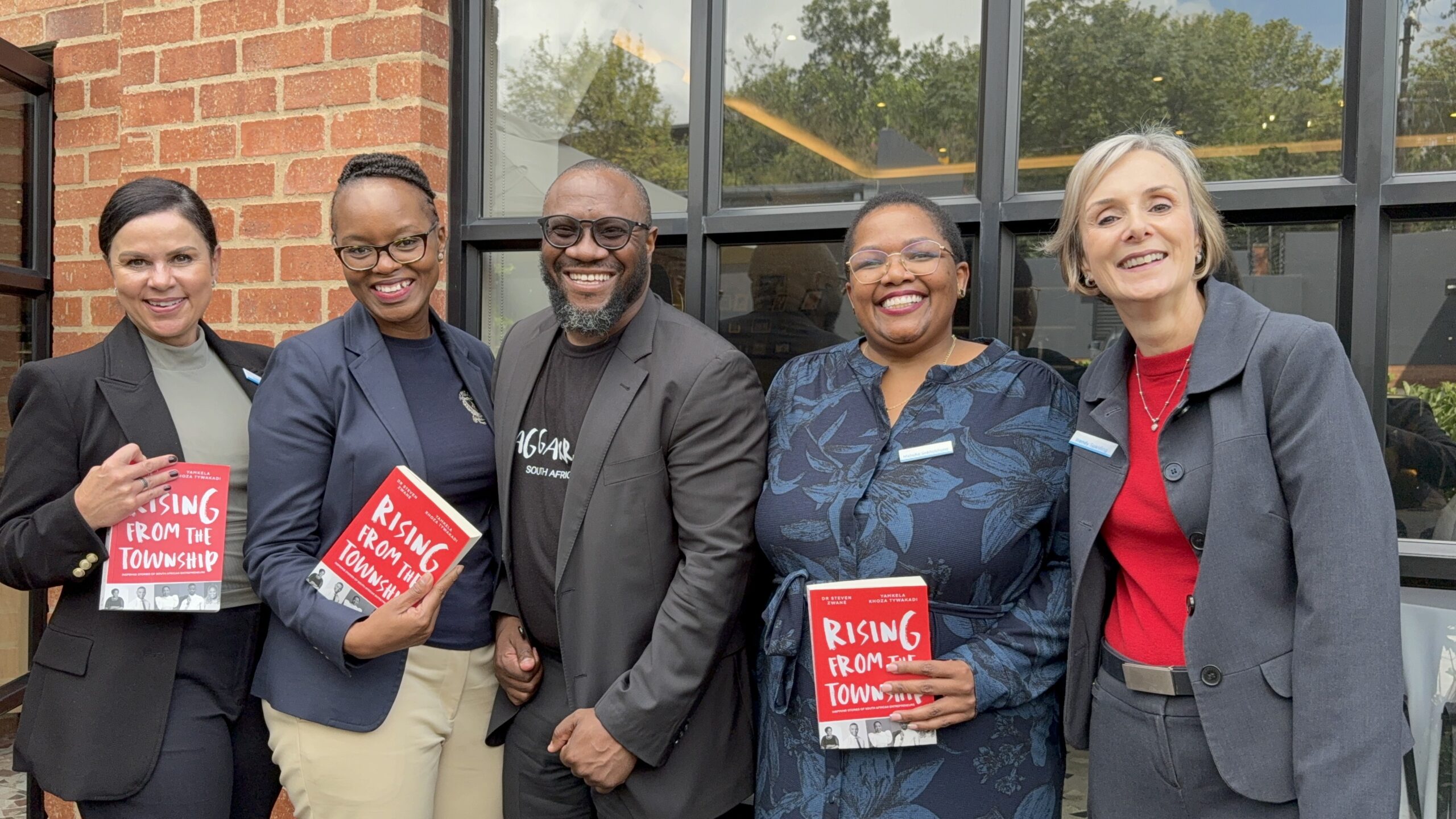
The event attracted notable leaders from various sectors, including executives from financial institutions, regulatory authorities, educational organisations and social impact enterprises. The diverse audience reflected the broad appeal of Dr Zwane’s message and Tuesday Consulting’s ability to convene influential professionals.
Dr Zwane’s presentation underscored the importance of representation and confidence-building in fostering entrepreneurship among South African youth. His book celebrates local ingenuity and calls for a new era of economic growth rooted in townships.
Tuesday Consulting’s Table Talk Tuesday continues to provide a valuable platform for meaningful dialogue on important social and economic issues. Each guest received a copy of Dr Zwane’s book, with the author available for signings following the presentation.